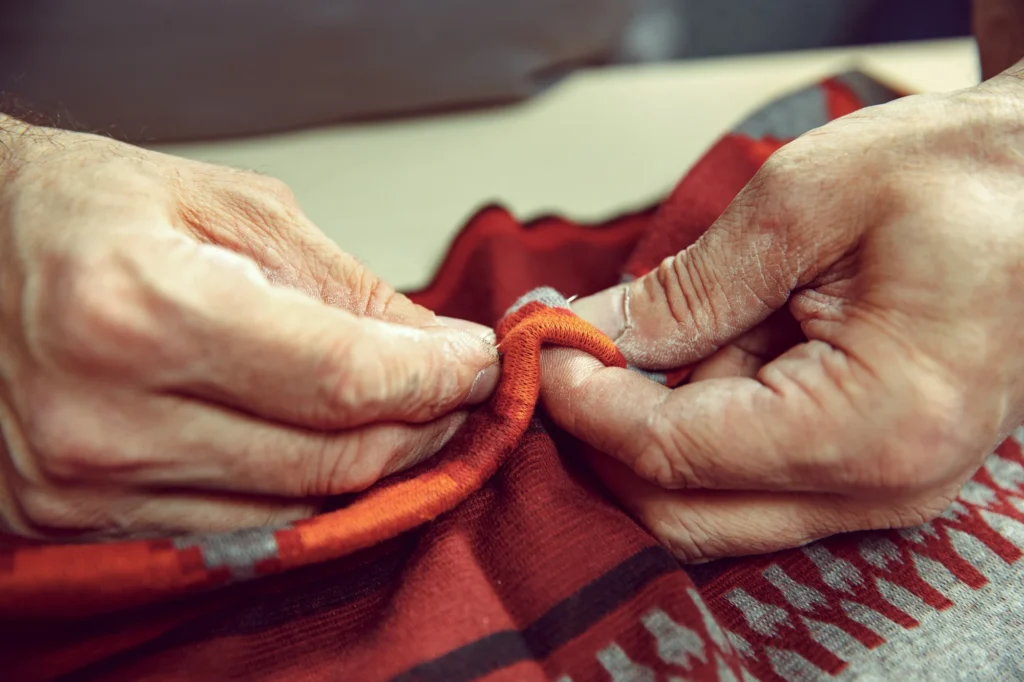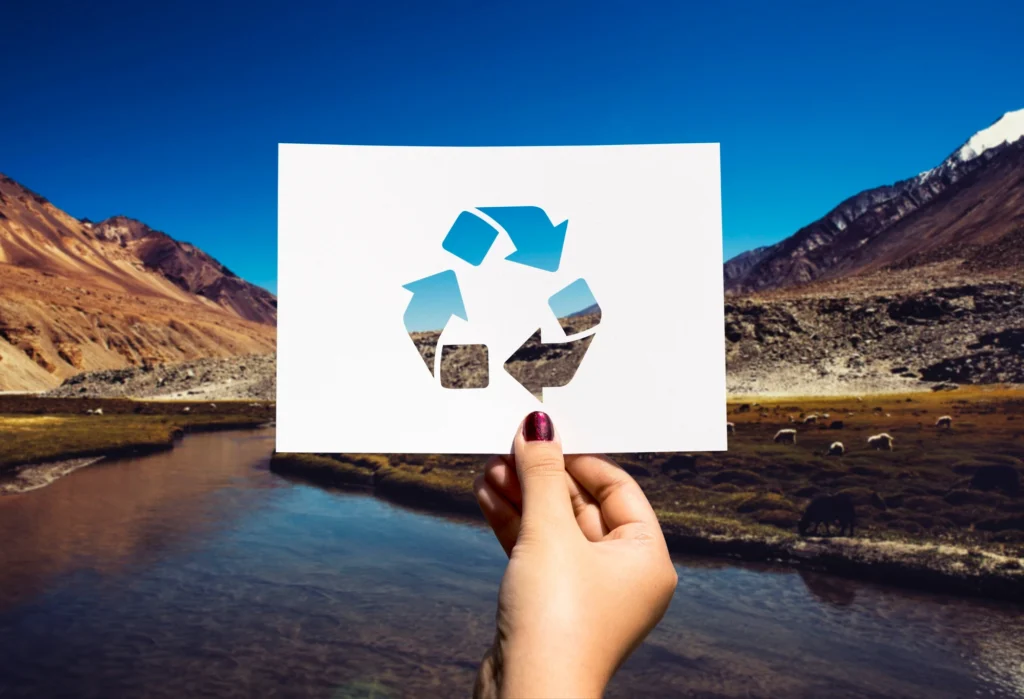
We are dedicated to sustainability and corporate social responsibility. Our goal is to be the most sustainable partner for businesses, making a significant impact through eco-friendly materials, ethical manufacturing, and responsible production processes.

We prioritize workplace safety, employee well-being, and minimizing environmental impact. Every product is made with responsibility and care.

We handpick our manufacturing partners to ensure fair wages, ethical labor practices, and no forced or inhumane working conditions.

We strive to use as many sustainable materials as possible, reducing our reliance on harmful synthetic fibers.
We only produce what’s needed, avoiding unnecessary waste and overproduction.
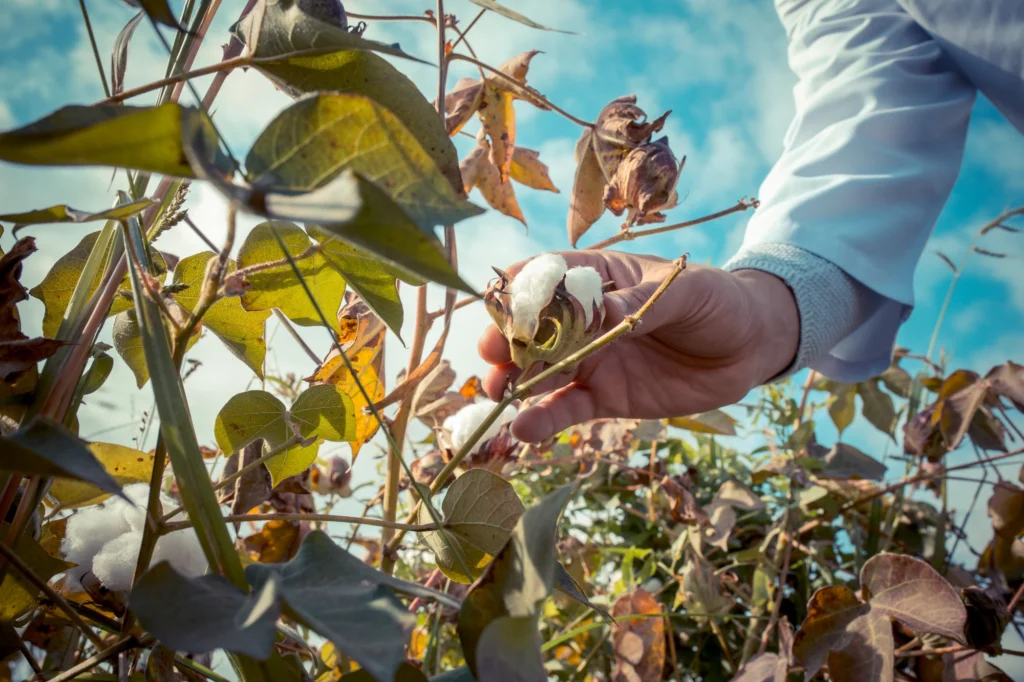
The fashion industry has a substantial environmental and social impact. That’s why we’re committed to transparency and sustainability in our sourcing process.
We partner with suppliers who:
– Uphold ethical practices
– Follow fair trade principles
– Minimize their carbon footprint
Through eco-friendly materials, recycling, and upcycling, we ensure our production is as responsible as possible.
We work only with certified manufacturers who:
– Provide safe and fair working conditions
– Follow international labor standards
– Guarantee fair wages and reasonable hours
Every worker in our supply chain is treated with dignity and respect.
Each of us must contribute to minimizing waste. One effective strategy is to avoid overproduction by creating high-quality, durable products. We encourage our customers and suppliers to use efficient resources to reduce waste and promote sustainability.

we love working with that you might consider
Bamboo is a fast-growing, renewable resource known for its strength, flexibility, and natural antibacterial properties.
Bamboo is an excellent sustainable choice because it grows rapidly without the need for pesticides or fertilizers and requires significantly less water compared to traditional crops like cotton. Bamboo plants absorb large amounts of CO2 and release more oxygen than many other plants, contributing positively to reducing greenhouse gases.
Wool is a fiber obtained from sheep and other animals. It’s valued for its warmth, durability, and moisture-wicking properties, making it a popular choice for clothing and textiles.
Wool is biodegradable and renewable, as sheep can be sheared annually without harm. It also has a longer lifespan compared to many synthetic fibers, reducing the need for frequent replacement and thus minimizing waste. Wool’s natural insulation properties help to regulate body temperature, reducing the need for additional heating or cooling, which can lower energy consumption.
Hemp is a versatile and hardy plant that produces strong, durable fibers. It’s used in a wide range of products, including textiles, paper, and bio-composites.
Hemp is a highly sustainable crop because it grows quickly, requires minimal pesticides, and enriches the soil in which it is planted. It also uses significantly less water than traditional crops like cotton. Hemp fibers are biodegradable and naturally resistant to mold and UV light, making them a durable and eco-friendly choice.
Coffee fibers are derived from recycled coffee grounds, which are processed into yarn and fabric. This innovative material is used in clothing and various other textile products.
Utilizing coffee grounds to create fibers helps reduce waste and repurpose a byproduct that would otherwise end up in landfills. Coffee fibers are also naturally odor-resistant, UV-protective, and moisture-wicking, making them an excellent sustainable alternative for activewear and other textiles.
Recycled plastic fibers, often sourced from post-consumer PET bottles, are used to create fabrics such as polyester. These materials are commonly found in clothing, accessories, and home textiles.
Using recycled plastic helps reduce the amount of plastic waste in landfills and oceans. The recycling process conserves energy and resources compared to producing virgin plastic. Textiles made from recycled plastic are durable and can be recycled again, promoting a circular economy.
Lyocell is a cellulose fiber made from wood pulp, usually sourced from sustainably managed forests. It’s known for its softness, breathability, and strength.
Lyocell production involves a closed-loop process that recycles water and solvents, minimizing environmental impact. The wood pulp used is often sourced from fast-growing, sustainably managed trees, making Lyocell a renewable resource. Lyocell is biodegradable and compostable, reducing its environmental footprint at the end of its lifecycle.
Retailored d.o.o.
Vrhovčeva cesta 8
1358 Log
Slovenia
P.E. Cesta Andreja Bitenca 68f
1000 Ljubljana
Slovenia
Most popular
Get in touch